Be sure to check out Part I and Part II!
by Joe Seamons
The idea of a permanent home for The Rhapsody Project was a concept that we had not dared dream of. When your programs and rehearsals are being held up and down the Rainier Valley between The Collaboratory, Northwest Tap Connection, Black & Tan Hall, the Ethiopian Community Center, and Washington Hall for month after month, it is difficult to stop, take a breath, and make the time to dream about what could and should be available to the young people you’re serving.
So, when The Rhapsody Project was contacted by representatives of The Cultural Space Agency in 2019, the dream we had not dared dream opened up as a real possibility. The conversation went something like this, “We are working to transform the dormant second floor of King Street Station into a hub that empowers youth through the arts, would The Rhapsody Project want to be involved there as one of the organizations?” The answer was an enthusiastic, “Yes, absolutely!” And so the dreaming and scheming began.
We brought together both students and culture bearers involved in our program to meet with the architects who were designing the space. In this way, we collected input from those who would be served by the space, rather than just having our leadership team dictate what could or should be done on their behalf. We did this design and planning work alongside two other partner organizations that served young people through ongoing arts programs:
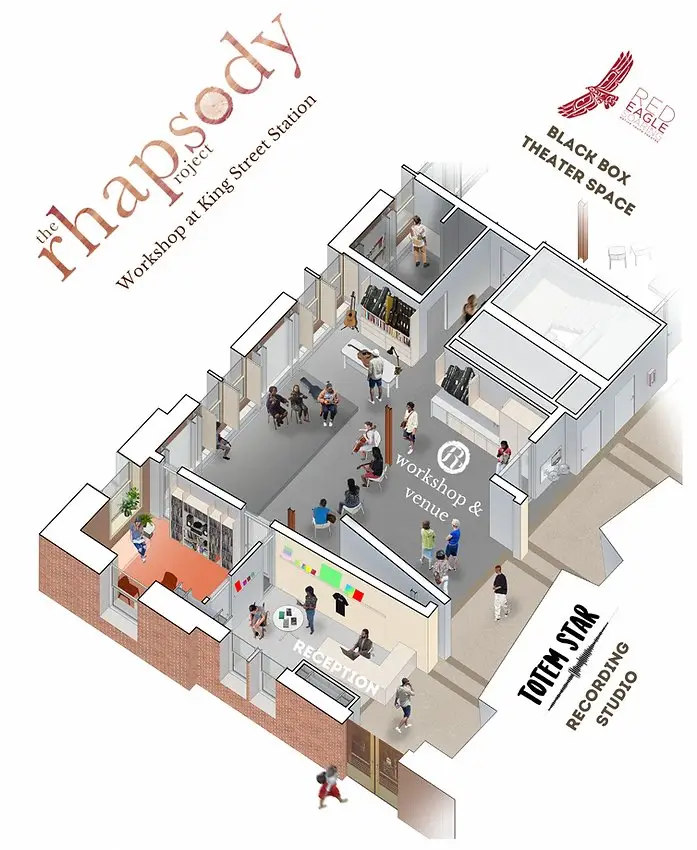
Totem Star is a non-profit that began in 2010. They give young people access to tools and mentors that help them write, record, and release original music. Red Eagle Soaring had been around for almost 30 years, delivering educational theater programs to Indigenous young people.
Each of these organizations proved to be closely aligned in terms of their values, and The Rhapsody Project was the youngest and smallest of the three. This created many opportunities for learning and growth, as our fledgling organization still did not even hold our own 501(c)3 status, and had never done anything resembling the capital campaign needed to raise funds for our space at King Street Station.
There was over 1200 square feet of space available for The Rhapsody Project, and—if we could just raise the (roughly) $1,000,000 needed to renovate our portion of the space—the “tenant improvements” we paid for would combine with the public benefit we provide to offset our rent over the course of a 33-years. So, along with the collaborative design process involving our students and leaders, the fundraising began!
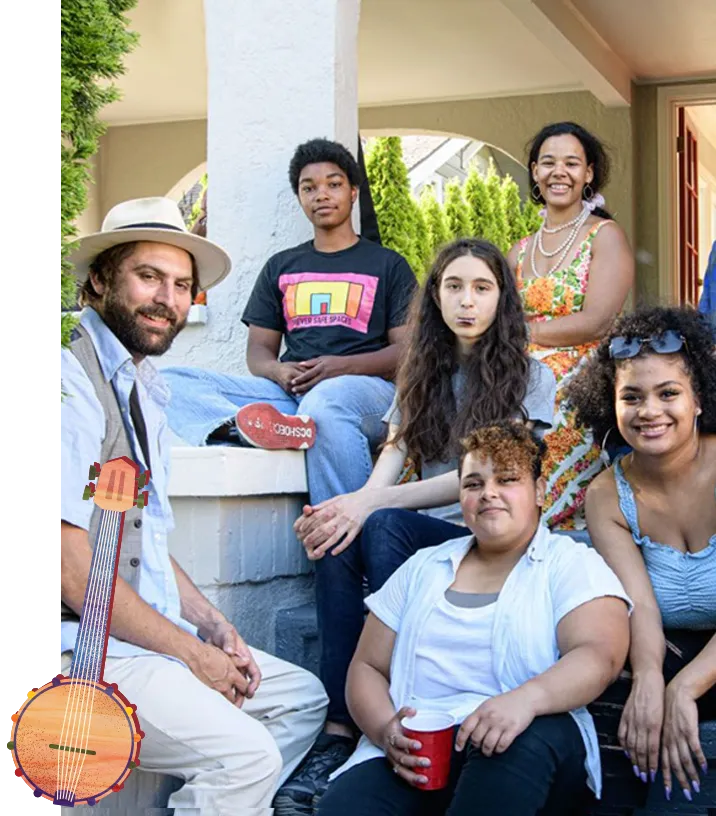
Just when we began wrapping our heads around The Rhapsody Project’s first-ever capital campaign, the COVID pandemic hit. All of our programming was quickly suspended, but we did not want to leave our students completely in the lurch. So, as we learned to fundraise in a whole new way for the dream of The Rhapsody Workshop at King Street Station, we began learning to host programs online. Like so many people, our students did not enjoy learning through the medium of a Zoom room, and so we began holding socially-distanced gatherings in parks, and in the backyards of willing families.
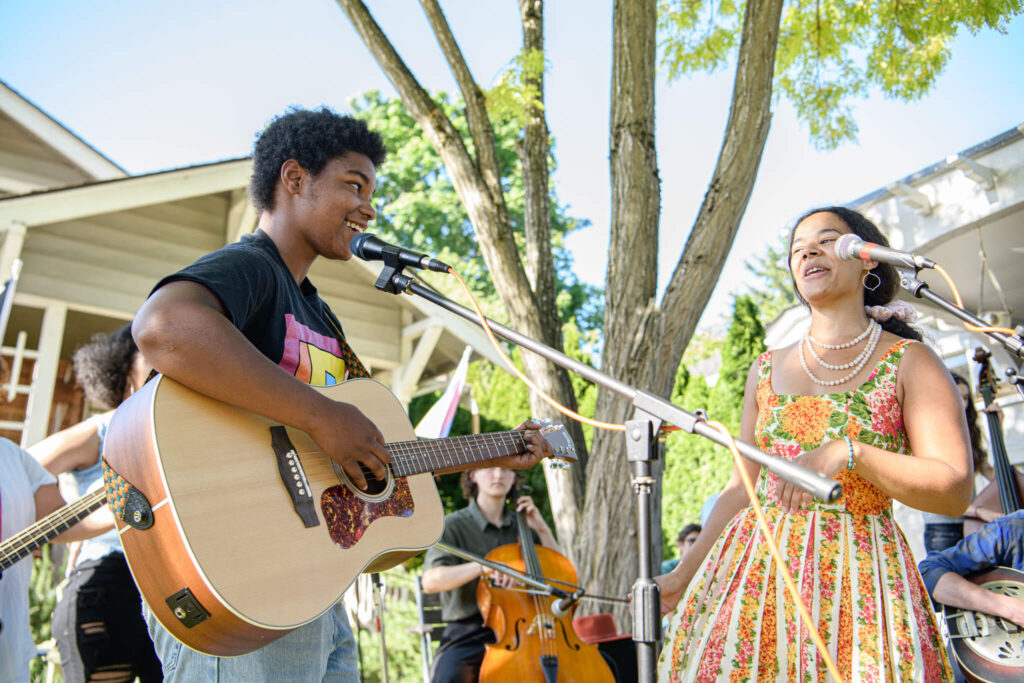
Meanwhile, the architects worked to finalize the designs for King Street Station, and we watched the cost estimates for the project rise and rise as the price of every building material began to increase. Undaunted, all three organizations worked with The Cultural Space Agency and our trusted grant consultant, Bailey Disher, to apply for every foundation, government, and other grant funding source we could discover. It took more than four years, but in the late winter of 2023 we had secured enough funding to begin construction!
The Rhapsody Project’s share of The Station Space was designed to contain three rooms and a sizable storage closet. The side rooms contained a space for repairing stringed instruments – the Lutherie Room – and a small library where students could listen to records or study the various books and recordings people had donated over the years. The main room became The Rhapsody Project workshop – with space for hosting classes, intimate performances, a little kitchenette, and storage shelves for our instrument library! In October of 2023, the basic space was completed and we secured occupancy.
By that time, we had also secured our own 501(c)3 status, so all we had to do was start figuring out how to sustain our leadership team while stewarding a cultural space expressly designed to serve and center young people whose circumstances placed them furthest from privilege in our society. It is proving to be a lifelong endeavor, but we are here for it.
Please stay tuned for part four in this series, where we will share the other surprising ways that our organization managed to grow during the pandemic!
The story’s not over yet — this series will have 7 parts total, connecting the dots of how we got from Part I to present day! Subscribe to our newsletter to get updates when each part is published.